Showing posts with label AAP Awareness Campaigns. Show all posts

June 30, 2008

AAP Summer Safety Tip Time - and Tips to Get the Tips to Your Families!


With summer in full swing and the 4th of July around the corner, we have a lot of advice to give out to our families in the short amount of time our office visits allow. The AAP has some great tips on all the important summer issues, including fireworks, that will help make your job a great deal easier -and more efficient:


1. Fireworks Safety

According to the National Fire Protection Association,

  • "In 2006, U.S. hospital emergency rooms treated an estimated 9,200 people for fireworks related injuries. 49% of the injuries were to the extremities and 46% were to the head. 55% of the 2006 fireworks injuries were burns, while 30% were contusions and lacerations.
  • The risk of fireworks injury was two-and-a-half times as high for children ages 10-14 as for the general population."

2. Summer Safety Tips Part I
Sun, Heat Stress, Pool Safety, Bugs, Playgrounds, Bikes and Lawnmowers

3. Summer Safety Tips Part II
Fireworks, Boating and ATVs

So, now that you have the links and highlights, there are some easy ways you can help your families remember the information:

1. Give out a cheat sheet in your office with these links.
2. Include these links in your email newsletter or have the local hospital do it for you. Likely your families receive some sort of seasonal bulletin from your community hospital and most are happy to include information you provide.
3. Post these links on your own blog or website.
4. Write a small article for a local newspaper or blog on summer safety and include these links. Not sure where to start, how about whatever paper you read in your own community!

If you have other ideas for how to share these great AAP tips with families, let me know and I'll share the ideas in a follow-up post: cocmeditor@pediatricsnow.com

Image

June 2, 2008

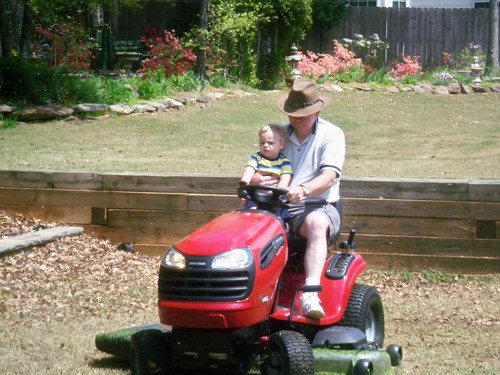
Lawn Mower Safety Awareness Starts Today

Did you know that "nearly 210,000 people – approximately 16,200 of them children under age 19 – were treated in doctors’ offices, clinics and emergency rooms for lawn mower-related injuries in 2007"? I learned this today from an AAP press release reminding us about lawn mower safety.

With June being National Safety month, lawn mower safety has been chosen as one of the key safety issues to promote.The American Society for Reconstructive Microsurgery (ASRM), the American Academy of Orthopaedic Surgeons (AAOS), the American Society of Plastic Surgeons (ASPS) and the American Academy of Pediatrics (AAP) have united together to encourage us to educate families on the dangers of lawn mowers by reviewing the following tips:

  • "Children should be at least 12 years old before they operate any lawn mower, and at least 16 years old for a ride-on mower.
  • Children should never be passengers on ride-on mowers.
  • Always wear sturdy shoes while mowing – not sandals.
  • Young children should be at a safe distance from the area you are mowing.
  • Before mowing, pick up stones, toys and debris from the lawn to prevent injuries from flying objects.
  • Always wear eye and hearing protection.
  • Use a mower with a control that stops it from moving forward if the handle is released.
  • Never pull backward or mow in reverse unless absolutely necessary – carefully look for others behind you when you do.
  • Start and refuel mowers outdoors – not in a garage. Refuel with the motor turned off and cool.
  • Blade settings should be set by an adult only.
  • Wait for blades to stop completely before removing the grass catcher, unclogging the discharge chute, or crossing gravel roads."
Here's a link to the AAP technical report on lawn more safety.

You can find more information on the lawn mower safety campaign here.

Image

May 30, 2008

Tomorrow Is World No Tobacco Day


Tomorrow's World No Tobacco Day has a media theme: Tobacco-Free Youth: Break the Tobacco Marketing Net.According to the AAP website,

"The tobacco industry spends billions of dollars worldwide on advertising, promotion, and sponsorship. Recent data from the Global Youth Tobacco Survey indicate an increase in tobacco use among adolescent girls in many countries. Much of this increase has been attributed to aggressive marketing by the tobacco industry, which encourages potential users, especially adolescents, to try tobacco and become long-term consumers.
Evidence-based tobacco-control strategies that are comprehensive, sustained, and support nonsmoking behaviors have been shown to prevent and reduce tobacco use. The World Health Organization Framework Convention on Tobacco Control calls on countries to implement scientifically proven measures to reduce tobacco use and its impact. Additional information on World No Tobacco Day 2008 activities is available at http://www.who.int/tobacco/wntd/2008/en/index.html."

The WHO interactive World No Tobacco Day website is worth exploring. Shaped like a web, it has buttons for each media industry that will take you to a page that then explains how that industry markets tobacco to youth. TV, movies, billboards, cultural events, sporting events, are among the many media venues listed in this web.

The AAP press release on World No Tobacco Day is worth reading, too. You'll find some interesting stats as well as ways the AAP has already worked with media groups to decrease the exposure of youth to tobacco.

Image: WHO Website